
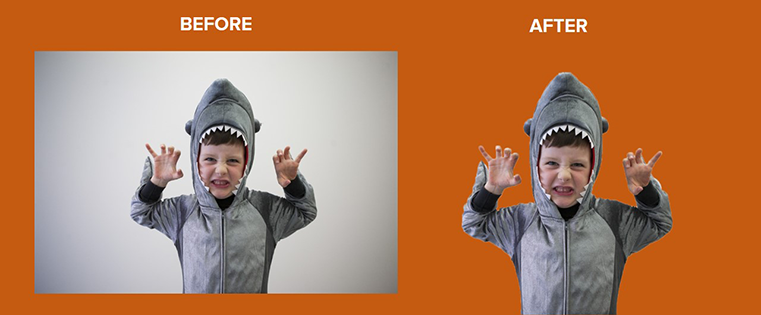
You know what one of my biggest design pet peeves is? When I’m trying to design something, but there’s an unwanted background on the image I’m using. Either I want to remove the photo background altogether, or I prefer a transparent background so the image assumes the look of any other background I put behind it.
Take the image on the left above, which is from our free, downloadable collection of holiday stock photos. That image would be so much more useful to my call-to-action, SlideShare presentation, blog post, or ebook if I could just remove that pesky background so it looked like the image on the right.
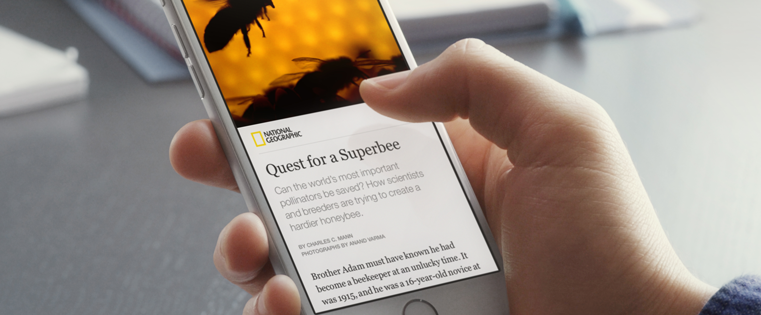
When Facebook recently launched Instant Articles, the internet and publishing community was buzzing.
Publishers were excited — by hosting their own articles within Facebook but still displaying their own ads, they could generate more traffic and attention from the Facebook community. Users were also excited — Instant Articles are much faster and more interactive than typical mobile websites.

Whoever said “cleanliness is next to godliness” hasn’t spent much time in office kitchens lately.
Regardless of whether you work at a Fortune 500 company, a small startup, or a mid-sized financial services firm, communal office kitchens have a funny way of attracting messes, spills, and close encounters of the liquid kind at every turn.
Social media community managers and public relations professionals have to deal with little problems every single day. These could include nasty comments, unhappy customers, delivery issues, or a marketing faux pas — all problems that arise frequently and deserve reasonable and empathetic responses.
There are times when they also have to deal with real crises, such as gun terror, natural disasters, and white collar crime.

Occasionally, one stumbles upon a stop-you-in-your-tracks statistic. For me, it was an IBM study that found 80% of corporate blogs contain fewer than five posts.
If the study centered on personal blogs, I’d understand. But corporate blogs? Wow. Further, given that HubSpot’s own research has determined marketers who blog are 13X more likely to drive a positive ROI than those who don’t, the abandon rate is even more startling.

Conventional wisdom is usually the safe play. Why take risks when there’s an established “right way” to do things?
In marketing, however, success often falls to those willing to buck trends and experiment.
When it comes to optimizing your landing pages, complacency and assumption are your worst enemies.

In an ideal world, marketers would have limitless budgets to invest in experimental initiatives and new programs. After all, the customer acquisition and retention landscape is evolving faster than ever. To see what works, it’s crucial to find new opportunities and test new waters.
The challenge, however, is that marketing budgets are often limited around what’s “proven” to work — which tends to look different from company to company.

“A picture is worth a thousand words.”
We’ve all heard this saying before, and to marketers, it’s becoming increasingly true. Images can help businesses suceed — tweets with images result in 18% more clicks, and 17% of marketers are planning to increase their use of visual assets in 2015.

This post originally appeared on HubSpot’s Agency Post. To read more content like this, subscribe to Agency Post.
You’ve been working to sell a prospective client on a retainer for months. You’ve sent them a range of articles, guides, and case studies. You created a proposal, a contract, and have followed up multiple times to move things along.

This post originally appeared on HubSpot’s Sales Blog. To read more content like this, subscribe to Sales.
To many salespeople, “social selling” equates to “LinkedIn.” According to a survey conducted by PeopleLinx, 76% of reps understand LinkedIn’s potential for sales, but a scant 16% see the value in Twitter for social selling.