
Kollaboration die nur auf Online Bekanntschaften beruht sind Ihnen zu unpersönlich? Sie haben Probleme mit dem Fortschritt der Online Welt Schritt zu halten? Das muss nicht sein !
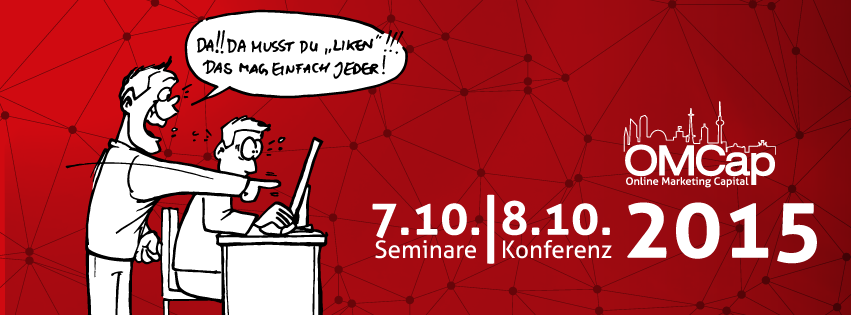
Jährlich gibt es viele regionale Fachveranstaltungen rund um Digital, Social & SEO bei denen Sie sich mit Experten und gleichgesinnten austauschen können. So auch bei der OMCap (kurz für: Online Marketing Capital), dem größten jährlichen Online Marketing Event in Berlin. Am 7.- 8.10.2015 versammeln sich nationale und internationale Experten aus verschiedenen Industrien für das zweitägige Spektakel in der Hauptstadt.

The main attraction of any live event is (or should be) the content. At HubSpot’s upcoming INBOUND event, for example, we have over 100 speakers from marketing, sales, and beyond, designed to attract thousands of attendees.
But sometimes, it’s the little things that can make an event go the extra mile. The special surprises the coordinators throw in; the prizes companies hand out; the contests that take place. You know … the free swag!

You know the drill: you find yourself clicking through an online shopping site, adding a couple shirts or laptop stickers to your shopping cart, and once you’re satisfied, you decide to check out. However, something stops you, like millions of online shoppers, from completing the process.

Reading on mobile devices has skyrocketed, opening up a world of opportunities for publishers and advertisers looking to hedge big bets on small screens.
However, mobile ad-blocking technology is also making strides. Apple, titan of mobile devices, indicated recently that they were planning to include content-blocking technologies in iOS 9 – an addition that would also cut off majority of ads encoded in a site’s JavaScript. Advertisers and publishers alike might be in trouble if they don’t step back and reassess their mobile strategies.

All it takes is a quick look behind the scenes at Clif Bar to realize that they don’t operate like most companies. That philosophy was made crystal clear when the company’s founders turned down an offer to sell the company for $120M in 2000.
As a result, Clif Bar has become one of the best places for employees to work and one of the toughest places to get a job (in 2014, the company received 7,700 applications for just 114 open roles, according to Fortune).

You know what gets discouraging? Sending out emails, but not receiving any responses. At all.
So how do you send a networking email that people will actually respond to?
Writing an effective networking email that gets results takes more effort than simply typing up a few sentences in a “compose” window.

For a marketer, it’s exciting to see your company grow and transcend the borders of your home country. On the flip side, international expansion can make your job significantly more complex.
Should your international goals vary from your regular goals? How will you handle international communication? What about prioritizing markets? Who comes first?

INBOUND 2015 is less than a week away! If you’re headed to Boston, you’ve probably taken a look at the agenda and seen the incredible speaker line up. To make it a little easier to choose, we’ve handpicked six sessions and events that are specifically geared towards ecommerce professionals. They’ll help you take a deep dive into everything from buy buttons to omni-channel personalization, to help you learn how to grow your ecommerce business.

Even if you’re already on the visual content bandwagon, it can be a struggle to actually start creating it — especially when you’re trying to communicate complex, detailed, and abstract topics.
So what’s a marketer to do?

Did you know that there is a certain type of blog post that makes up 10% of a blog’s repertoire, but are responsible for generating 38% of total blog traffic? If you do the math, that means just one of these special posts brings in the same amount of traffic as six regular posts.
In a recent study, we investigated these standout posts, which we call “compounding posts,” and discovered that they’re found in all types of business blogs. Yep, even yours — you just have to know how to find them.