

Most companies don’t think of themselves as ecommerce, but if you’re using your website to sell a product, you are in ecommerce! Adding the high-volume and fast sales cycle ecommerce business to any existing website can allow you to learn more about your customers, learn it faster, and make money as you do. Here’s a quick crash course in how to make the most of your ecommerce capabilities — from what you can sell to how to start selling, and how to set yourself up for ecommerce success.

Getting chosen to speak at a TED conference is no easy feat.
Attending a TED conference — as in, sitting in the audience — is a little like applying for college, with a short essay-style application including questions like “What are you passionate about?” But to speak at a conference is even harder. TED’s content director Kelly Stoetzel and her team review thousands of candidates and whittle them down to 60-70 speakers for the twice-a-year, week-long conferences.

When I was in high school, I was always doodling in my notebooks. Hand-drawn letters and little pictograms covered my homework, tests, and papers. I would get lost in creating new ways to write out my name or drawing cartoon representations of my friends. Teachers were constantly telling me to to “knock it off” and focus on my studies.
Eventually, I did knock it off — mostly because I realized I wasn’t that good at drawing on paper.

Fewer people read your blog posts than you think. More people read your headline than you think, too.
On average, only 20% of those who read your headline will click through to read your article. That means good headlines lose 80% of your audience. Great headlines, though, can make a dramatic impact in the opposite direction. You can increase the traffic to your articles by as much as 500%, based solely on the headline.

One of the toughest challenges CMOs face is getting buy-in on new programs and initiatives from the rest of the executive team — especially from the CFO. A lot of CMOs feel like they’re begging for money each month. And if the money ends up going to something that doesn’t quite pan out, their budget is on the chopping block.
But it doesn’t have to be that way. There are many ways CMOs can improve their relationship with their CFOs, and the best way to get started is to figure out how your CFO thinks.
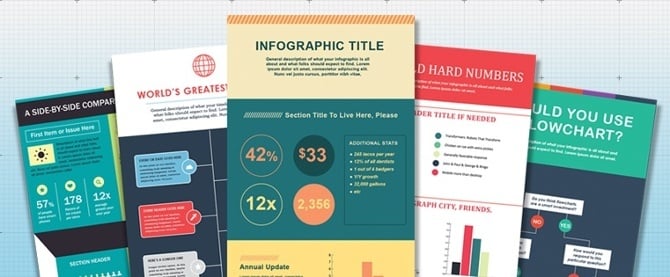
Wouldn’t it be great if creating infographics was as simple as writing regular ol’ text-based blog posts? Unfortunately, the reality is that making visual content like this usually takes a lot more time, effort, and let’s face it — skill — than the written word. Usually.
But considering the popularity and effectiveness of visual content in marketing today, you can’t just afford to throw in the towel.

SEO can be tough. It is no miracle worker –– at least not overnight. Focusing hours of hard work on keywords and metadata likely isn’t any small business owner’s idea of money or time well-spent. Yet, the ROI from doing so has a long tail that seriously impacts your bottom line.
In fact, not spending time on SEO can mean failure for your ecommerce business. After all, if no one can find you, you don’t exist! And on the internet, that means if Google isn’t ranking you well, you might as well not even be selling online.

Bill Macaitis knows something about growth. In his two years as Zendesk’s top marketer, he helped take the company from venture-funded startup to an IPO resulting in a $1.7 billion market cap. When he led online marketing and operations at Salesforce, he helped grow revenues from $900M to $3 billion. Now, he’s the CMO at Slack, the 17-month old messaging startup that’s rumored already to be worth $2.76 billion.
What’s the secret to his latest company’s growth?

If you’re a frequent reader of this blog, you’ve probably heard of “inbound marketing” by now. But have you heard of the next big thing — “midbound marketing”?
Don’t feel bad if you haven’t. I hadn’t either until I was emailing with Pete Emerson, Senior Web Designer & Developer at New Breed Marketing, one of our partner agencies.

**Sets alarm for 6am, checks email, goes to bed**
**Wakes up to sound of alarm, turns off alarm, checks email**
Does this routine sound familiar? I can’t be the only one that is nearly attached at the hip to my phone, checking email constantly. Email has been arguably the #1 form of communication for business since the early 2000’s. With email being a key piece in the way we communicate, there are certain “do’s” and “don’ts” we should be following while emailing at work: