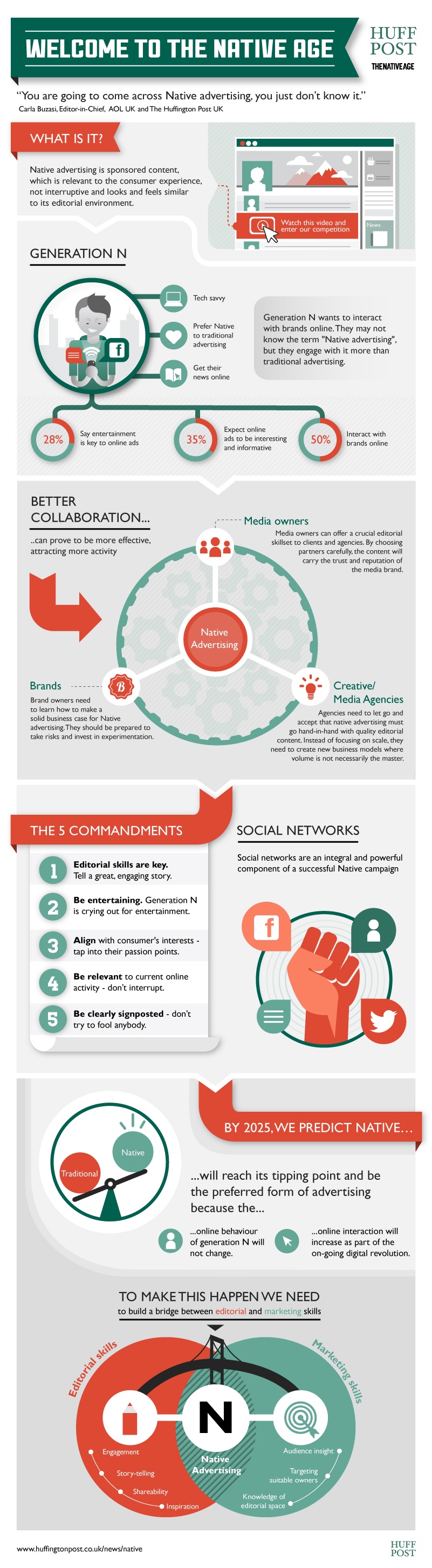
You’ve heard it a million times, native advertising is the next big thing. But what exactly is native advertising, and why is it causing such a stir for brands, agencies, and publishers alike?
Visual content: We all know we need it … but many of us don’t have the skills, tools, or knowledge of how to do it well.
Since 2013, Canva’s been on a mission to change that. Turns out, it’s working. Two years after launching, the company has nearly seven million users, and it’s growing by 30K users each week day.

Have you ever finished creating a WordPress website and loved everything about it? Then, promptly began to hate it after realizing it takes forever to load?

Words are hard.
Whether you’re a published author or just getting started with blogging, it’s not always easy to string words together in a way that makes sense, sounds good, and makes the reader feel something.

Getting a prospective student’s contact information is not an invitation to immediately send an email telling them to “Apply Now.” Rather, think of their initial interest, and the fact that they volunteered their personal information, as a window to start a conversation.

The malls are decked with holly, your inbox is filling up with holiday-themed promotions, and you’ve deemed it socially acceptable to start listening to your favorite holiday playlist on Spotify… or maybe that’s just me.
Either way, the holiday season is here, and marketers are gearing up to finish off the year strong. But just like shopping for gifts, planning your holiday campaign is something you don’t want to shove off until the last minute.

Every year there are tons of amazing marketing events held around the world. Inspiration is shared, knowledge is dropped, and marketers have a chance to geek out over the lineup of speakers.
Trouble is, time and resources can often hold many marketers back from attending these events.

Marketers and salespeople are the most critical links to a company’s customers. And the moment inbound marketing was implemented into your organization, your marketing department merged with the sales department. They are no longer separate, working on different islands. And they must work together at each stage of the sales funnel.

It’s no secret that visual content is dominating the social web right now. Facebook’s News Feed update that made images much larger and more visible is a great example of this. After all, people are naturally more attracted to images than they are to text — making visual content highly shareable and engaging.
Posting compelling visual content is one of the most important things you can do to improve your social media strategy.

Here at HubSpot, we know a thing or two about webinars. We’ve
set the Guinness World Record for largest online marketing seminar, hosted webinars with partners such as
Facebook,
LinkedIn and
Unbounce, and we’re able to host and promote in-house because of
the modern marketing team we’ve built.
No matter how great the content of your webinar is, though, it doesn’t mean much if there’s nobody there to hear it.