
This post originally appeared on HubSpot’s Agency Post. To read more content like this, subscribe to Agency Post.
As a result of the recent Penguin updates, link building has changed … again.
Google Penguin is an algorithm update aimed at decreasing search engine rankings of a website due to a large number of spammy, low authority links in their backlink profile.

This post originally appeared on HubSpot’s Sales Blog. To read more content like this, subscribe to Sales.
You’ve probably taken an IQ test at some point in your life. But have you taken an EQ test?
Measuring and improving emotional intelligence has become increasingly important in recent years as more and more research emerges on the connection between a person’s Emotional Quotient (EQ) and professional success.

I don’t know about you, but there are a number of really awful things I’d rather endure than sitting through a boring Powerpoint presentation.
Seriously, I’d rather eat burnt popcorn, go get my oil changed, or dare I say it, get a paper cut in between my fingers than suffer through a bad deck.
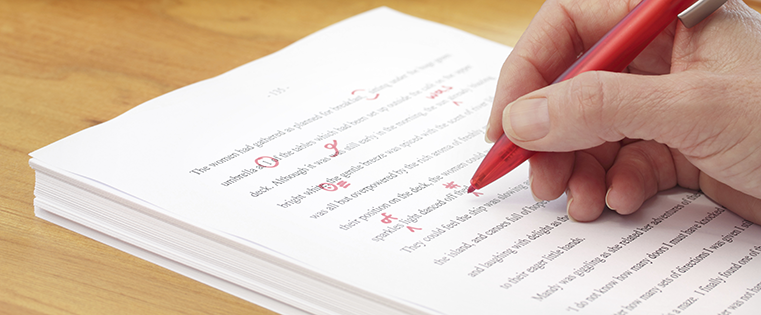
As we all know, content creation isn’t as simple as just stringing together a few words and hitting “publish.” At least all high-quality content creators know this.
If you really think about it, the editorial process has quite a few steps — from ideation, to concepting, to production, to proofreading, editing and copyediting. Unfortunately, it’s that last part that often gets undermined, rushed through, or altogether just swept aside as writers and content creators hurry to get content out the door.

Musical artists don’t become famous just because their music is good. (Just watch Katy Perry’s lip-sync malfunction at the NRJ Music Awards and you’ll see my point.) Believe it or not, pop stars have to market themselves just like we have to market our businesses.
And often, artists will hire entire marketing teams to do this, especially those trying to build their brand or rebrand entirely.

When you’re designing cover photos, graphics, and other social media assets, sometimes knowing the bare bones image dimensions isn’t enough.
What if you wanted to place text or an arrow on your Facebook cover photo without it getting covered by the profile photo? And what about the shared link thumbnails on Facebook or in-stream photos on Twitter … how big should those be?

What’s the one thing business owners and their employees, partners and even customers all have in common? Well, at the most basic level, they’re all human. So why is it sometimes so challenging for businesses to showcase this in their marketing efforts?
Perhaps some people don’t want to show any biases that might deter any potential leads. Perhaps some may want to present themselves as strictly professional. Others may not care about their tone at all, but would rather focus on finding the right keywords to implement throughout their platforms. Some may not even realize just how robotic their brand’s voice really is.

Riddle me this: Why do people buy quarter-inch drill bits?
While there are a million possible answers to this question, Leo McGinneva offers perhaps the most interesting explanation.
“They don’t want quarter-inch bits. They want quarter-inch holes,” he explains.

In July 2014, a study analyzing the SEO of the top 500 retailers for Internet Retailer’s Mobile 500 guide found that the mobile adoption rates across those top 500 retailers were as follows: 59% use dedicated mobile sites, 15% use dynamic serving, 14% had no mobile presence, just 9% were responsive. In all, that’s less than 50 of the top 500 retailers using responsive, and that is still about a 3x increase from 2013 adoption rates.

This post originally appeared on HubSpot’s Agency Post. To read more content like this, subscribe to Agency Post.
Image-based search is becoming more and more common. Pinterest and Instagram have conditioned people to use and trust this form of discovery, and oftentimes, I find it produces even more relevant results than text-based search. With images, you can quickly determine the quality, while text search results require you to scan the headline, description, and the URL to make a decision about the page’s relevance.